

The ThruScan Story, 120 Critical Sites and Counting
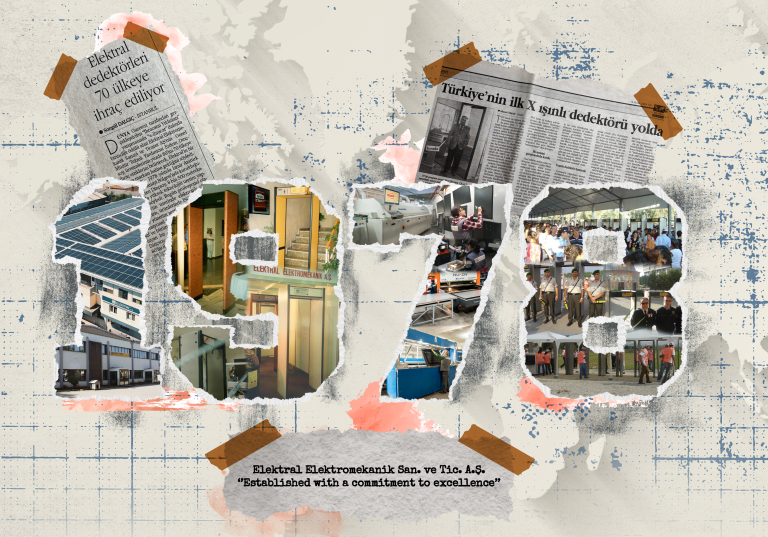
İzmir, 1978. A small workshop. One engineer’s belief. And a simple question:
Why should a country depend on others for technology that protects its own people?
In those years, Türkiye relied heavily on imported electronic systems. Even basic maintenance and service often required foreign suppliers. For a group of engineers at Elektral, that dependence was more than an economic issue—it was a strategic vulnerability.
So they set a goal that sounded ambitious at the time: build from zero, compete globally, and deliver the best.
1990: Security becomes urgent—and the market has no local solution
As security needs became more critical across airports, public buildings, and border points, one reality stood out: there was no domestic production in walk-through metal detection.
Elektral made a clear decision: Türkiye would have its own walk-through metal detector—built to world-class standards.
The journey wasn’t easy. Global competition was strong, procurement requirements were demanding, and the benchmark was set by established international brands. But Elektral’s focus stayed the same: make it better, make it reliable, and make it sustainable.
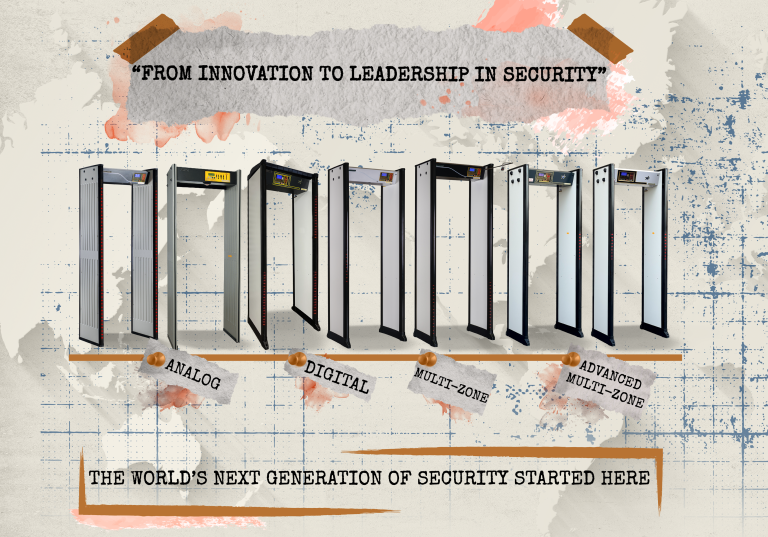
1999: The digital shift—and the birth of ThruScan
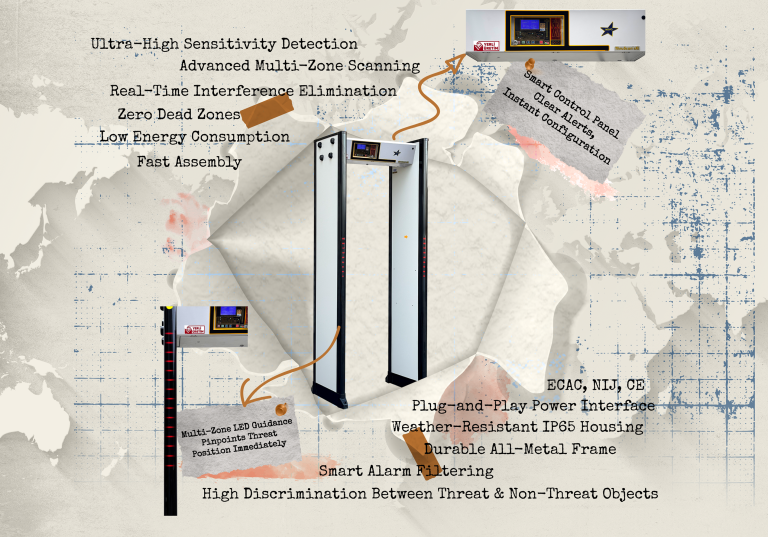
As walk-through metal detectors transitioned from analog to digital technology, Elektral moved with the change and developed a new product line: ThruScan.
The new generation was designed to be:
-
more sensitive,
-
more intelligent,
-
more dependable in real-world field conditions.
And as performance improved, so did visibility—especially through international tenders and trade events.
2005: A major breakthrough
A large-scale procurement was announced—one of the most significant walk-through metal detector acquisitions of its time in Türkiye.
Elektral entered the competition alongside some of the world’s biggest brands. When the test results were finalized, ThruScan stood out for sensitivity, reliability, and cost efficiency.
180 ThruScan units were installed at critical locations under high-security protocols—marking an important moment: Türkiye began using its own domestically developed detector at scale.
2010: Expansion across Türkiye
After that milestone, adoption accelerated. New deployments followed, including large public institutions and high-security facilities.
Over time, ThruScan solutions were preferred in a growing list of critical sites—supporting the idea that local production can compete at the highest level when performance and service continuity are strong.
A long road to one of the toughest benchmarks: Nationwide law enforcement deployments
Some procurements take more than technology—they take persistence.
Elektral continued improving performance, strengthening quality assurance, and building long-term service readiness. The effort ultimately led to a new chapter in 2025, where ThruScan’s technical capability, production strength, and after-sales readiness supported a wider-scale adoption.
2025: ThruScan deployed in 120 critical locations
Today, ThruScan systems are operating across 120 critical sites throughout Türkiye—from west to east, from the Black Sea region to the southeast.
Project figures reflect the scale:
-
Installed units lined end-to-end exceed 1 kilometer,
-
The deployment includes 24,000+ light sources,
-
And 250,000+ components combined across the installed systems.
Beyond the numbers, the impact is operational:
-
Lower maintenance burden,
-
Faster technical support from within the country,
-
Less downtime and fewer logistics delays,
-
And a stronger sense of confidence in domestic engineering.
The conclusion: persistence becomes performance
This is not only a product story. It’s a story about building capability—step by step—until local technology becomes a trusted choice for critical security operations.
Elektral continues working with the same principle that started the journey in 1978:
Build better. Deliver reliably. Support long-term.